
Auteur/autrice : julien

  • Hungary: When Internal Sabotage Enables External Interference

    Hungary: When Internal Sabotage Enables External Interference

    What the EU should learn from Viktor Orbán’s disloyalty to better defend itself.

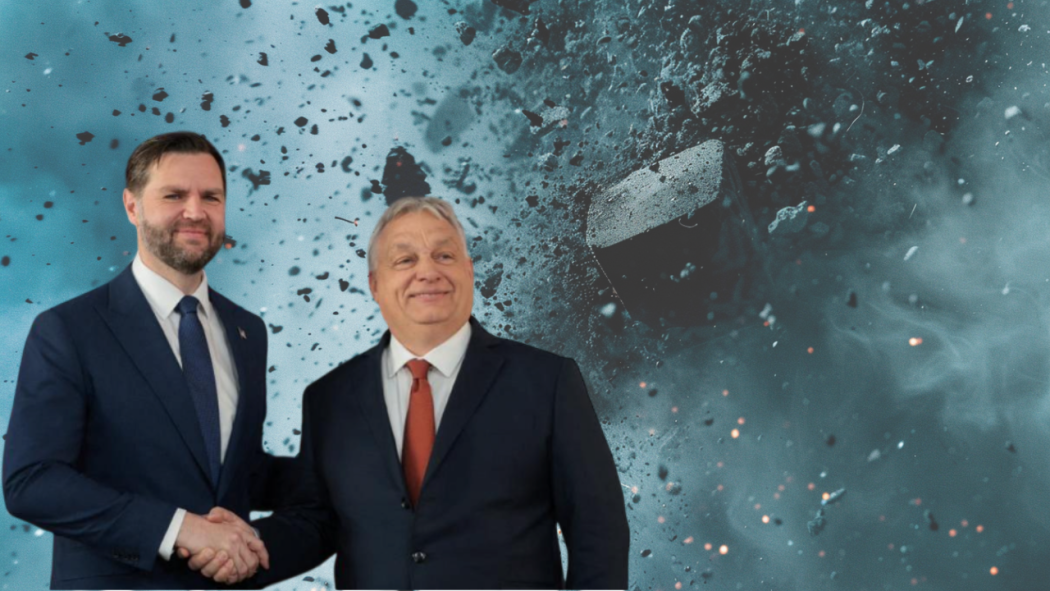
    U.S. Vice President JD Vance traveled to Budapest to support Viktor Orbán on the eve of the upcoming parliamentary elections on April 12. On this occasion, despite the war with  Iran, President Donald Trump took the time to intervene by phone at a campaign rally to express his « love » for the Hungarian Prime Minister.

    The official U.S. support for Viktor Orbán’s obstructionist efforts within the European Union institutions constitutes serious interference.

     When an American comes to tell Hungarian voters that they must « choose their future without foreign forces telling them what to do, » it is surreal. What, in this case, are the foreign forces meddling in the election?

    Europeans are perfectly capable of choosing their own leaders, especially when the outcome of an election determines their future, that of Ukrainians, and the security of all of Europe. Indeed, Viktor Orbán, an ally of Vladimir Putin, is blocking the disbursement of €90 billion in aid that Ukrainian President Volodymyr Zelensky desperately needs to resist Russian attacks.

    By openly violating the principle of « loyal cooperation » enshrined in the treaties (Article 4.3 TEU), the Hungarian government is endangering human lives.

    We did not build Europe to end up here.

    After signing an unbalanced trade agreement—indeed, an indecent one—with the United States, after agreeing to replace our dependence on Russian fossil fuels with supplies of hydrocarbons derived from the polluting exploitation of American shale gas, and after reading in the U.S. National Security Strategy that the European Union is now a target of the United States, how much longer will we accept being treated as lackeys?

    How much longer will we make life easier for foreign powers that seek to destroy us, whether through digital means, disinformation, interference, or even arms?

    Let us begin by dispelling the misrepresentations in the statements of the U.S. Vice President and in all the MAGA propaganda that, through nationalist parties, is flooding the European political debate.

    Firstly, the EU is not a « bureaucracy » that surreptitiously strips states of their sovereignty. Hungarians are adults who, of their own free will, chose to join the European Union. Membership is voluntary, approved through the democratic procedures of the country in question.

    Having worked with then President of the European Commission Romano Prodi to prepare the accession of Central and Eastern European countries to the EU ahead of the 2004 enlargement, I can testify to the European commitment of the leaders of these countries, as well as the youth who saw in it, rightly, the hope of a better life.

    Prodi would humorously ask those who compared sharing sovereignty in the EU to the Soviet yoke: « Remind me when you applied to join the Warsaw Pact? »

    The founding fathers of the European Community had a noble political goal: to build peace, foster cooperation among peoples who were once enemies, when others would have perpetuated the cycle of vengeance and hatred. This project deserves better than scorn. It is a major achievement for humanity. But that is precisely what troubles those who build their business on nationalism and the sale of weapons.

    Secondly, the door is open for those who wish to leave the EU, as Brexit has shown. But Viktor Orbán, like most nationalists, is careful not to embrace this option. They have seen the price paid by the British. They know what they gain, in hard cash and international prestige, by staying in the EU. 

    However, they deceive voters because merely not being « against » Europe is not enough to make it thrive.

    Thirdly, European institutions are democratic. The EU’s highest political body, the European Council, consists of legitimate representatives from the member states, as does the Council of Ministers. The European Parliament, directly elected by European citizens, holds the Commission accountable.

    In 1999,the Commission led by Jacques Santer resigned under the threat of a censure motion by MEPs. In 2019, I myself was prevented from joining the Commission after hearings in the European Parliament. 

    I experienced firsthand how far the control of elected representatives goes, and I respected their decision, even though, in this case, the vote of rejection was based on slander, as the legal proceedings against me resulted in two decisions to dismiss the case that fully cleared me.

    The constant criticism of « bureaucracy » is nothing but nonsense. Bureaucracy also exists at the national and even local levels. Who really cares? 

    This easy criticism stems from the fact that national representatives rarely take responsibility, upon returning home, for the concessions they had to make in Brussels.

    Finally, the respect shown by the Trump administration for the U.S. Congress, and for the country’s institutions as a whole—starting with the Federal Reserve, the judiciary, or certain agencies supposed to be independent—is not such that we should listen to JD Vance’s pronouncements as gospel or as unassailable constitutional expertise.

    In reality, what the upcoming elections in Hungary reveal is the nervousness of the international alliance of nationalists and the corrupt elites. 

    In recent years, Mr. Orbán has built a highly lucrative business for himself and his clan, consisting notably of selling his ability to cause disruption within the EU to third powers—Russia, the United States, or China (which has invested more in Hungary than in any other member state). He has turned the country into the gateway for political infiltration into EU institutions and economic entryism into the single market.

    We can no longer tolerate EU governments forgetting their  duty of loyal cooperation. This is not idealism, but the defense of our interests as much as our values: by abusing their veto power, they endanger our security and our credibility vis-à-vis third countries.

    There are precedents where the European Council has managed to bypass obstruction. 

    In June 2025, the IEP Bocconi annual event commemorated the Milan European Council of June 1985, during which the Italian presidency circumvented the opposition of British Prime Minister Margaret Thatcher by deciding, by majority, to open negotiations on what would become the Single European Act. 

    The Iron Lady eventually rejoined the discussion table. And even if the precedents are not relevant, we must find a way to ostracize all Viktor Orbáns—present and future—from the EU, even if it means letting the Court of Justice rule on their habitual abuse of rights.

    This is the « Europe of Nations » sold by MAGA and their European nationalist friends, barricaded behind the veto. It is a cut-price Europe made by governments that, under the pretext of building bridges with the world’s great powers, sell themselves to the highest bidder.

    IEP@BU does not express opinions of its own. The opinions expressed in this publication are those of the authors. Any errors or omissions are the responsibility of the authors.

    If you want to stay up-to-date with the initiative of the Institute for European Policymaking@Bocconi University, subscribe to our monthly NEWSLETTER here.

  • There Is No Veto Against Reality

    There Is No Veto Against Reality

    Rule of law and use of force

    The debate over vetoes must be reframed. On issues such as climate change or pandemics, there is no veto right, because reality cannot be vetoed. In foreign affairs as well, we need to be able to decide collectively, and that obviously requires majority voting. Also, we could relax: being from time to time in the minority is not a drama.

    This article is an edited version of remarks delivered by Sylvie Goulard at the event “L’Europa in cammino. Dialogo, democrazia, libertà”, held at Bocconi University on 27 February 2026. The discussion brought together Cardinal Matteo Zuppi, Andrea Sironi, Francesco Billari and Sylvie Goulard to reflect on the future of the European project in a time of geopolitical tensions, growing polarization and declining trust in democratic institutions.

    The struggle of law against force is not abstract or theoretical. For a vast part of humanity—especially for many women—it is a daily reality. We cannot accept as a starting point the idea that law is now over, and violence is history’s only language. The first way to combat violence is to say clearly that it leads nowhere.

    Identity

    What Europeans share today is more important than what divides them. Parties and governments obsessed with “identity” miss the most important point: the challenge, for Europe and for all human groups, is less about who we are—where we come from—than about what we do—our contribution to the community, as Italian President Sergio Mattarella stressed in his 2024 New Year’s Eve speech.

    Belonging cannot be reduced to a passport or one’s origin. Europe is precisely the space where law should confer belonging, not where belonging should determine the law.

    This is visible in concrete issues such as the death penalty. In Europe, its absence feels natural—but in many countries it exists, even in advanced democracies. We have too often taken our achievements for granted. Europe must become conscious again of what it has achieved and represents.

    What is Europe? Its roots are multiple: Christianity, Greek philosophy, Roman law, Jewish tradition—and also the Enlightenment, which must be more explicitly acknowledged, as it has been in the social doctrine of the Church since the 20th century and in all European treaties.

    Europe’s strength lies in its ability to renew itself, to absorb diverse inheritances, and transform them into a common principle of freedom and dignity. But there is no Europe without strong shared values.

    Coalition of the willing?

    Today we face a war of aggression in Europe (in Ukraine)—an event of this magnitude unseen since the postwar period. Dialogue remains necessary at the diplomatic level but cannot ignore who is the aggressor and which war crimes were perpetrated.

    The real question is not only whether there is a group of willing countries, but also what they provide and whether they are genuinely prepared to move forward.

    European integration has often begun with small vanguards—Schengen, the monetary union. Proceeding with a smaller group is not scandalous, especially if the process remains inclusive. What is scandalous is when some countries block others from advancing.

    We are likely on the eve of a new phase in which some countries will move ahead—on an inclusive basis, with an open door and a positive objective for all.

    In this context, we need to respect the rules without being obsessed by procedures. The historical context is changing dramatically. Europeans must adapt and move ahead.

    We also need to respect cultural diversity. Turning Europe into a linguistically homogeneous area ruled by simple, functional “Globish,” would diminish cultural richness and fuel nationalism.

    The debate over vetoes must also be reframed. On issues such as climate change or pandemics, there is no veto right, because reality cannot be vetoed. In foreign affairs as well, we need to be able to decide collectively, and that obviously requires majority voting. Also, we could relax: being from time to time in the minority is not a drama.

    Europe and the world

    If only a minority of the world lives in liberal democracies, the response should not be pessimism but awareness of our own fortune. Freedom remains universally desired, as seen in protest movements worldwide. Those who deny the universality of human rights are autocrats or those in positions of domination—men, religious authorities, and other entrenched powers.

    Europe has something extraordinary to defend and propose. It must stop being intimidated by nationalist propaganda and Realpolitik rhetoric. Historically, Realpolitik was the language of powers preparing for war. And nationalism fuels conflicts. Europe’s merit since 1945 has been to seek another path.

    The market was a means, not the end. The founders never lost sight of the project’s moral dimension: reconciliation, peace, and solidarity.

    Looking ahead requires avoiding self-reference or remaining trapped in the dream of the “West”. Beyond the US lie China and Africa, alongside cross-cutting issues such as climate transition and demographic change.

    Europe must engage seriously with a young African continent and confront climate change and environmental degradation even when public debate sidelines it.

    Ultimately, responsibility lies with national governments that put the emphasis on “national interest” without ever clearly defining what those interests are, usually from a very short-term perspective. Sometimes national agendas are highjacked by private interests, in particular when future oriented, young start-ups struggle against established companies. They must decide to face reality and move forward. Universities can play a role, because Europe has never advanced without the drive of its youth. Their future is at stake.

    Sylvie Goulard

  • Natura ed economia: mai più “business as usual”

    Natura ed economia: mai più “business as usual”

    Il rapporto Business and Biodiversity Assessment dell’Intergovernmental Science-Policy Platform on Biodiversity and Ecosystem Services (IPBES), pubblicato nel febbraio 2026, potrebbe essere riassunto in un solo messaggio: mai più “business as usual”.

    Questo gruppo globale di scienziati (79 esperti di primo piano provenienti da 35 Paesi e da tutte le regioni del mondo, che lavorano a stretto contatto con le imprese e con i rappresentanti dei popoli indigeni e delle comunità locali) è paragonabile all’Intergovernmental Panel on Climate Change (IPCC) e ha dedicato tre anni all’analisi dei legami tra attività economica e ambiente. Dopo il precedente lavoro sul “nexus” tra natura, clima, cibo, salute e acqua, questo nuovo rapporto rappresenta un documento di riferimento. Deve essere preso sul serio — non per indurre disperazione, ma per stimolare l’azione mettendo in luce le falle dei nostri modelli economici.

    Le loro conclusioni ci esortano a riconoscere i rischi, per le imprese e per la società, derivanti dall’esaurimento delle risorse naturali e a modificare le nostre pratiche. Il rapporto costituisce al tempo stesso una diagnosi e una cassetta degli attrezzi per l’azione.

    Anzitutto, ricorda una verità evidente che spesso trascuriamo: dobbiamo molto alla natura (le nostre dipendenze) e l’attività umana la trasforma (i nostri impatti). “Tutte le imprese dipendono dalla biodiversità e la influenzano e possono essere agenti di cambiamento positivo.” Dobbiamo renderci conto che la crescita dell’economia globale è avvenuta al prezzo di un’immensa perdita di biodiversità.

    Inoltre, sottolinea che il modello produttivo dominante non è più “compatibile con il raggiungimento di un futuro giusto e sostenibile.” Al contrario, “perpetua un rischio sistemico, minacciando l’economia, la stabilità finanziaria e il benessere umano — con implicazioni per i diritti umani. Questi rischi sistemici derivanti dal declino della biodiversità evidenziano l’urgente necessità di un cambiamento trasformativo.”

    Ancora più importante, è possibile (ed è necessario) dare una risposta cooperativa e collettiva per creare un nuovo ambiente imprenditoriale più equo e sostenibile. Per riuscirci, sono necessari cambiamenti nei quadri giuridici, nei sistemi economici e finanziari, nelle norme sociali e culturali, nonché nell’uso dei dati e della tecnologia. Occorre inoltre sviluppare nuove competenze e conoscenze.

    Nel 2023, i flussi finanziari pubblici e privati globali con impatti negativi diretti sulla natura sono stati stimati in 7.300 miliardi di dollari, mentre solo 220 miliardi di dollari di flussi finanziari pubblici e privati sono stati destinati nel 2023 ad attività che contribuiscono alla conservazione e al ripristino della biodiversità.

    La gravità di questo squilibrio richiede la mobilitazione di governi, istituzioni finanziarie, imprese e individui, in particolare delle comunità locali e dei popoli indigeni.

    Cosa possono fare le imprese?

    Il rapporto individua quattro azioni chiave:

    • Istituire assetti di governance aziendale e quadri strategici per orientare azioni che migliorino i risultati in materia di biodiversità lungo le operazioni, le catene del valore e i portafogli.
    • Attuare azioni a livello di sito per ottenere risultati positivi per la biodiversità, applicando la gerarchia della mitigazione: evitare, ridurre al minimo, ripristinare e compensare gli impatti.
    • Affrontare impatti e dipendenze nelle catene del valore, direttamente oppure influenzando i partner a monte (fornitori) e a valle (distributori, rivenditori, consumatori).
    • Per le istituzioni finanziarie, spostare gli investimenti dalle attività dannose verso quelle con impatti positivi.

    Esistono metodologie per misurare impatti e dipendenze utilizzando i dati a supporto dei processi decisionali. Le informazioni dal basso, come le osservazioni specifiche dei siti, il monitoraggio partecipativo e l’analisi spaziale, sono fondamentali. “Le informazioni locali e i dati specifici generati attraverso approcci dal basso includono osservazioni basate sulla localizzazione, monitoraggio e mappatura partecipativi e analisi spaziali costruite su queste fonti di dati. Tali approcci possono integrare dati e metriche che rappresentano i valori, le conoscenze, i diritti e gli interessi locali di altri gruppi, compresi i popoli indigeni e le comunità locali.”

    Le decisioni dall’alto verso il basso, come gli approcci basati sul ciclo di vita e i modelli macroeconomici ambientali su larga scala, possono integrare questi sforzi, a condizione che riflettano i valori ambientali locali, compresi gli interessi delle comunità indigene.

    Questi metodi devono coprire un ambito geografico sufficientemente ampio, incorporare pienamente tutte le dipendenze e gli impatti e rimanere pertinenti e reattivi ai fenomeni emergenti. Idealmente, la misurazione di impatti e dipendenze dovrebbe combinare l’expertise scientifica con la conoscenza empirica delle comunità locali, spesso trascurate nonostante siano le migliori custodi dei propri ambienti.

    La lettura di questo rapporto induce a riflettere. Il compito che ci attende è immenso: trasformare i nostri modelli produttivi e persino il nostro rapporto con la natura. Tuttavia, i benefici sono considerevoli. Con l’aumento delle temperature che mette sotto pressione gli ecosistemi, preservare la natura è un imperativo ecologico e morale, oltre che economico. Se la natura dovesse perdere la capacità di agire come pozzo di assorbimento del carbonio, potrebbe aggravare l’aumento delle temperature, creando un circolo vizioso e privandoci di acqua, cibo e ricchezza. Possiamo fare di meglio.

    Sylvie Goulard

    “La libellula” è un blog su natura e impresa, curato da Sylvie Goulard

  • This is what the EU’s trade bazooka was meant for

    This is what the EU’s trade bazooka was meant for

    The EU’s Anti-Coercion Instrument (ACI), often called its trade « bazooka, » was created in 2023 precisely to counter economic coercion from third countries through trade or investment threats. In an opinion piece for Politico (January 21, 2026), former Italian Prime Minister Mario Monti and Sylvie Goulard argue that recent actions and threats by U.S. President Donald Trump—such as demands over Greenland, 10% tariffs on dissenting NATO allies, and 200% tariffs on French wine—clearly fit the ACI’s criteria for coercion. The tool prioritizes negotiation first but allows countermeasures like tariffs, investment restrictions, or public procurement limits if needed. The authors urge the EU to activate it responsibly to defend its sovereignty, credibility, and values, warning that shying away—especially against a powerful ally—would invite further disrespect, weaken the bloc internally, and erode its role as a rules-based global player.

  • Munich Security Conference Foundation – Munich Security Conference (MSC)

    Munich Security Conference Foundation – Munich Security Conference (MSC)

    Depuis décembre 2024, Sylvie Goulard est membre du Conseil de la Fondation (Foundation Council) de la Munich Security Conference Foundation, l’instance suprême de gouvernance de la Munich Security Conference (MSC).

    Cette nomination, annoncée le 10 décembre 2024 aux côtés de celle de Florian Herrmann (représentant du Land de Bavière), renforce l’accent franco-allemand et européen au sein de l’organisation. Wolfgang Ischinger, président du Conseil de la Fondation, a salué cette arrivée en soulignant l’importance d’un moteur franco-allemand fort pour relever les grands défis stratégiques de l’Europe.

    Rôle et mission de la Munich Security Conference Foundation

    Fondée en 2018 par l’ambassadeur Wolfgang Ischinger pour garantir la pérennité et l’indépendance de la Munich Security Conference, la Fondation assure la gouvernance stratégique de la MSC, plateforme mondiale de référence pour le dialogue sur la politique étrangère et de sécurité.

    La Munich Security Conference (MSC), créée en 1963 sous le nom de « Wehrkunde », est devenue le forum international le plus influent sur les questions de sécurité. Chaque année en février à Munich, elle réunit plus de 450 décideurs de haut niveau (chefs d’État, ministres, dirigeants d’organisations internationales, représentants du secteur privé, médias, académie et société civile) pour débattre des défis globaux actuels et futurs.

    Ses principales missions incluent :

    • L’organisation de la conférence annuelle principale et de nombreux formats tout au long de l’année (Munich Leaders Meetings, dialogues régionaux, etc.) ;
    • La publication d’analyses et rapports de référence, comme le Munich Security Report annuel ;
    • La promotion du dialogue transatlantique, de l’intégration européenne et de la coopération internationale pour la paix et la sécurité ;
    • Le soutien à la culture de la politique étrangère et de sécurité en Allemagne et en Europe.

    Le Conseil de la Fondation (Foundation Council), présidé par Wolfgang Ischinger, est l’organe décisionnel principal de la Fondation. Il définit la stratégie globale et assure la supervision de la MSC, dont le président exécutif est aujourd’hui Jens Stoltenberg (depuis 2025).

    En rejoignant ce conseil, Sylvie Goulard contribue à orienter les orientations stratégiques de la MSC, en apportant son expertise en affaires européennes, défense, géopolitique et relations franco-allemandes – un atout clé pour aborder les enjeux de sécurité actuels, comme la guerre en Ukraine, la multipolarisation mondiale ou le renforcement de l’autonomie stratégique européenne.

    (Sources : annonce officielle de la Munich Security Conference du 10 décembre 2024, site securityconference.org)

    Pour plus de détail, vous pouvez consulter le site:

  • « Non esiste solo Trump. L’Ue si dia una strategia autonoma »

    « Non esiste solo Trump. L’Ue si dia una strategia autonoma »

    Intervista con l’ex ministra ed europarlamentare francese, oggi docente alla Bocconi: « Non dovremmo sorprenderci se l’Europa non riesce ad agire come una potenza: non l’abbiamo organizzata per esserlo. Adesso è tempo di farlo ». Ma « bisogna essere chiari sui costi finanziari, umani e politici ». Una dura critica a Meloni sull’Ucraina, perché « va dai Volenterosi a farsi la foto e poi non si prende responsabilità reali », e a Macron che sul Mercosur sbaglia […]

  • « Libérons la politique étrangère de l’UE de sa léthargie »

    « Libérons la politique étrangère de l’UE de sa léthargie »

    Face aux menaces russe et chinoise, ainsi qu’au distanciation américaine, l’Europe doit urgemment renforcer son autonom ie stratégique. La convergence entre le chancelier Friedrich Merz et le président Emmanuel Macron offre une opportunité historique : abandonner l’unanimité en politique étrangère via un « noyau dur » pionnier, et créer une coalition élargie (incluant le Royaume-Uni) pour un marché de la défense compétitif et intégré.

    Il est temps d’agir résolument pour préserver l’intégration européenne et éviter le retour des divisions nationales destructrices.

  • Wie sich Europa gegen Trump und Putin behaupten kann

    Wie sich Europa gegen Trump und Putin behaupten kann

    In diesem FAZ-Gastbeitrag warne ich zusammen mit Wolfgang Ischinger: Nimmt man die neue US-Sicherheitsstrategie ernst, droht Europa seine „zivilisatorische Auslöschung“. Wir müssen handeln.

    Merz’ Mahnung an Kohl (Europa als Wertegemeinschaft) und Macrons Aufruf zur strategischen Autonomie bieten eine historische Chance. Ich schlage vor:

    Eine „Koalition der Willigen“ außerhalb der EU-Institutionen, inklusive Großbritannien und NATO-Partner, um Europa effektiv zu verteidigen.

    „Kerneuropa“ wiederbeleben: Eine Pioniergruppe befreit die EU-Außenpolitik vom Einstimmigkeitszwang und stärkt unsere Stimme – vor allem in Technologie.

  • For an agriculture that regenerates both soil and the economy

    For an agriculture that regenerates both soil and the economy

    In this article « For an agriculture that regenerates both soil and the economy » (SDA Bocconi Insight, December 2025), I reflect on the biblical reminder from Genesis that humans are dust and must cultivate the soil, emphasizing our deep connection to the earth as a provider of food, materials, regulation, and renewal—yet one we’ve disrupted through overuse.

    I argue that intensive farming’s soil depletion, pesticide excess, and pollinator decline threaten economic value chains, making preservation essential for ecological, health, and business reasons. Drawing on the SDA Bocconi study 2050Now Lamaison (with French companies), I advocate a regenerative model where everything is connected and nothing lost, based on reduce, reuse, recycle, and regenerate.

    Highlighting examples like LVMH’s practices for high-quality grapes, cotton, leather, and perfumes—restoring soil health, biodiversity, water cycles, and socio-economic stability—and preferences for « agroecology » with reduced inputs and biodiversity integration, I extend regeneration to forestry (e.g., avoiding clear-cutting) and oceans (ending overfishing).

    These common-sense approaches, modernized with technology, recognize our fragility and duty to future generations for true sustainability.

  • L’élysée n’est pas le Quirinal

    L’élysée n’est pas le Quirinal

    Lorem ipsum dolor sit amet, consectetur adipiscing elit, sed do eiusmod tempor incididunt ut labore et dolore magna aliqua. Ut enim ad minim veniam, quis nostrud exercitation ullamco laboris nisi ut aliquip ex ea commodo consequat.

    Duis aute irure dolor in reprehenderit in voluptate velit esse cillum dolore eu fugiat nulla pariatur. Excepteur sint occaecat cupidatat non proident, sunt in culpa qui officia deserunt mollit anim id est laborum.