Auteur/autrice : julien

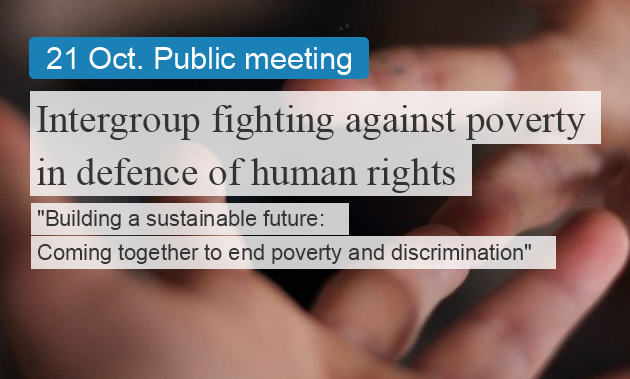
  • Public Meeting of the Intergroup Fighting Against Poverty in Defence of Human Rights to mark the International Day for the Eradication of Poverty

    Public Meeting of the Intergroup Fighting Against Poverty in Defence of Human Rights to mark the International Day for the Eradication of Poverty

    A Long Walk to Poverty Awareness

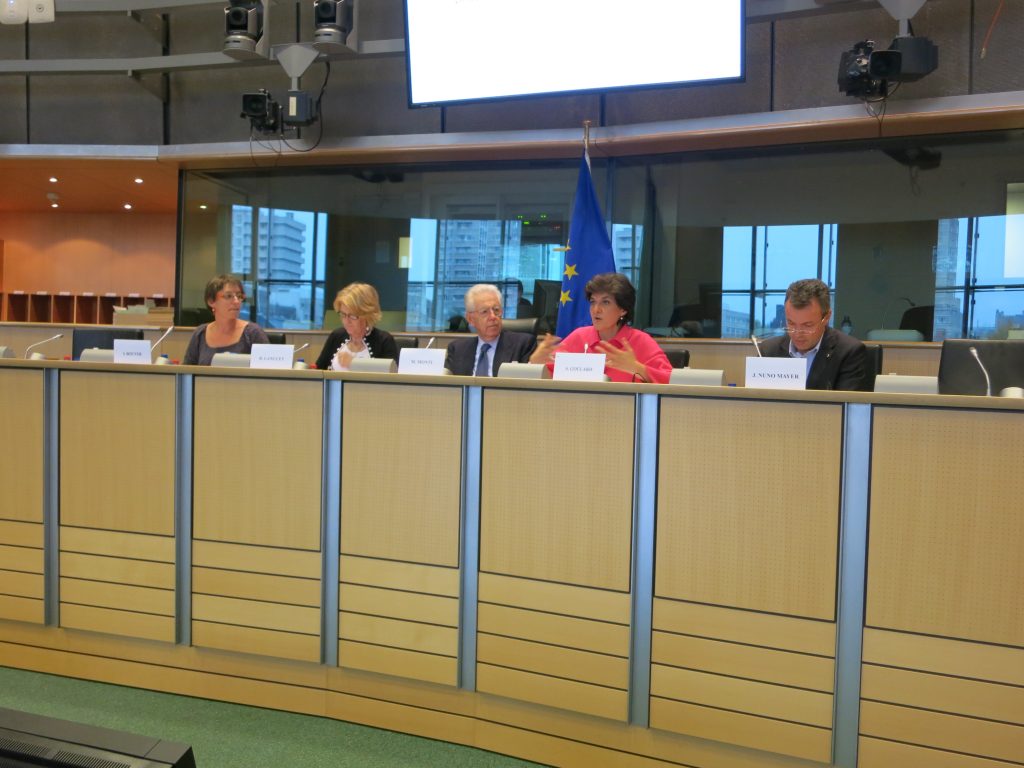
    Mario Monti opened the meeting with a key note speech which reflected on the role of globalisation in the world and whether or not it is responsible for increasing poverty levels? There have been positive impacts thanks for globalised markets and the parallel developments of globalised governance means that public powers have been able to also organise themselves in parallel to provide global management solutions to global markets. The development of the European project has enabled many barriers to be removed and to stimulate growth, and through the Treaties public policies have been put in place to accompany this and to ensure that the market is not stunted by protectionism, nor that cartels can be formed to abuse a dominant position. Overall globalisation has helped to reduce the unequal distribution of wealth up to now, which has been positive. ‘Third world’ countries have been able to develop because of globalisation, which is positive, but in ‘developed countries’ there has been a growing gap between rich and poor, with the rich becoming very rich and the poor very poor, The development of the ‘third world’ means it is no longer possible for the ‘developed countries’ to use their imperialist policies to exploit them.

    However it is not reasonable to blame European “austerity” measures for increased poverty in the EU. Imagine the state of poverty in the Member States if the EU did not exist: in the 1960/70s the public was indifferent to public debt and deficit, and there was no EU Commissioner telling Member States off for their excessive deficit and no public debate about the issue. Thus governments spent beyond their means, placing the debt onto the next generation, who now are often struggling to find work. Are these people victims of “austerity” or irresponsible budgetary policies in the past? Sound, sustainable fiscal consolidation demands a budget which is more or less balanced, over the course of the cycle, with the possibility to go beyond these limits if the investments being made clearly have the potential to create economic growth. This represents common sense.

    Those who are against “austerity” want to go back to the old system, often very fruitful for the politicians in the short-term, but with negative effects on the young and future generations in the longer-term. Societal inequalities have to be taken into account, and the market forces which often lead to an unacceptably unbalanced distribution of wealth need to be harnessed through parallel policies, in the form of taxation, which harness the growth and re-distribute wealth. The problems seen nowadays come to a greater extent from a lack of Europe, where there is a refusal at the Member State level to coordinate taxation and reduce tax competition, for example, and to harness the advantages of economic activity for all rather than from European policies being responsible for increased poverty.

    A panel discussion followed Mario Monti’s speech.

    Sylvie Goulard, intergroup president, made a brief presentation providing an overview of recent actions at European level to fight against poverty and social exclusion, from the Lisbon Strategy through to the creation and implementation of the European Semester. The issue of poverty has entered the consciousness of European decision makers, and there is a will to improve the situation for Europe’s most deprived, as the objective of the EU2020 strategy to reduce the number of people living in poverty or at risk of poverty by 20 million illustrates.

    Unfortunately the data collected clearly shows to what extent these positive ambitions are yet to bring positive, concrete results. Instead quite the opposite is unfortunately true; figures show that since 2010 the number of people living in poverty or at risk of poverty has unfortunately increased in the EU. Many questions remain open and need to be reflected on, for example concrete definitions concerning poverty.

    Her presentation (see below) examined what fiscal consolidation is, why it is necessary and what effects the choices of national governments have had on different sectors of society, for example spending increases on older people and the impact this has had on budgetary resources for education and families. As Mario Monti had already underlined, tax policy is a very important element of fighting against inequalities and ensuring a better distribution of wealth throughout society. Different tax policies have a range of both direct and indirect effects on Europe’s most deprived, which need to be taken into account. Tax evasion, which remains a big problem in Europe and is deeply unfair on Europe’s citizens who are contributing to society through their taxes, also needs to be tackled, as the Commission has started to do with the decisions concerning Fiat and Starbucks on 21st October.

    Reflection needs to continue, both in terms of how the work force is viewed in economic terms and the importance of investing in human capital, but also how to diversify funding opportunities, for example through the private sector, rather than relying solely on public finances as the tool to fight against poverty. Something which is very clear is that effective policies will only be conceived if civil society, including the most deprived, is included in their conception.

    https://www.sylviegoulard.eu/wp-content/uploads/2015/10/slides-21-october-EN-updated-23102015.pdf

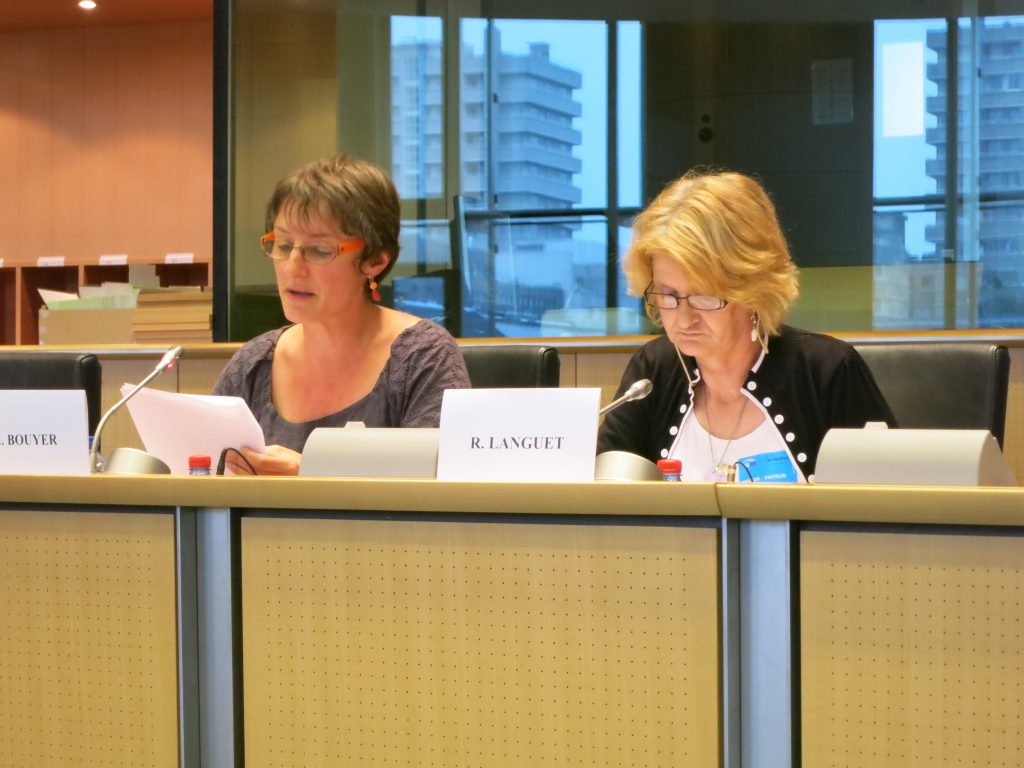
    Raymonde Languet and Isabelle Bouyer, representatives of ATD Fourth World in Champagne Ardennes, presented the long battle which ATD has undertaken to try to ensure that social precariousness is legally recognised as a potential source of discrimination. Since 2009 ATD is working to see this element added to the list of discrimination criteria in French law. This is not seen as an end in itself but an important marker and reference point in their fight to end this discrimination. ATD and its members are fighting to allow all members of society, including the most deprived, to live with dignity, not to simply manage to survive. A law proposal to fight against social precariousness was passed in the French Senate in June 2015, and will soon be discussed in the National Assembly.

    https://www.sylviegoulard.eu/wp-content/uploads/2015/10/2015-10-20_INTERVENTION-AU-PARLEMENT-EUROPEEN-LE-21_Reims.pdf

    Raymonde and Isabelle used poignant examples, experienced by people living in poverty in Reims to illustrate the discrimination suffered because of social precariousness. For example a mother and son where the son started orthodontic treatment with a mutuality but during the treatment changed to having universal health cover (which means you do not have to pay for health care in France). The dentist announced, in the waiting room in front of other patients, that he would no longer treat the boy, and that he had to go to the hospital. Both the mother and son felt great shame. That evening the boy removed his appliance alone in his bedroom and has never worn one since. At 12 years of age he had already experienced public humiliation because his parents receive universal health cover.

    It is only by considering Europe’s most deprived as partners that this humiliation and discrimination will stop. If one side considers that they know everything and the other nothing then civic rights will continue to be denied to some in society.

    Jorge Nuno Mayer from Caritas Europa recalled that 1% of the world’s population owns more than 50% of global wealth. At the midway point it is clear that the EU is far from reaching its EU2020 objectives. However he also highlighted that the Millennium Development Goals have achieved some positive results, and on an even more positive note, the UN Sustainable Development Goals adopted a few weeks ago focus not just on developing countries but also wealthier countries, like the EU Member States.

    This intervention picked up elements of all the other speakers’ points. The need for budgetary balance was underlined, but highlighted the difference in means when talking about the budget of a country and that of a family. Extreme measures have been taken to rescue banks which were in trouble, and it is now essential to ensure that irresponsibility in the financial sector does not continue because it is assumed that the state will always pick up the bill. The figures speak for themselves; although the economic situation seems to be improving slightly poverty continues to rise, as do unemployment figures. Reforms are necessary, but they should have both fiscal durability and social assessments before it is decided to implement them.

    Jorge also highlighted some of the success stories which Caritas has put in place in Member States where they are present, which are often highly innovative. For example there is a hotel in Vienna called Magda’s Hotel. Vienna is seeing many refugees arriving, struggling to find work and facing extreme poverty and exclusion. To counter this Magda’s Hotel has been set up as a role model for combatting poverty and creating new jobs for accredited refugees. 20 refugees from 16 countries, speaking 36 languages run the hotel, which is run as a social business rather than for profit. Projects like this illustrate the importance of social investment and how a new vision is needed to assess the potential of GDP growth through exactly these kinds of projects.

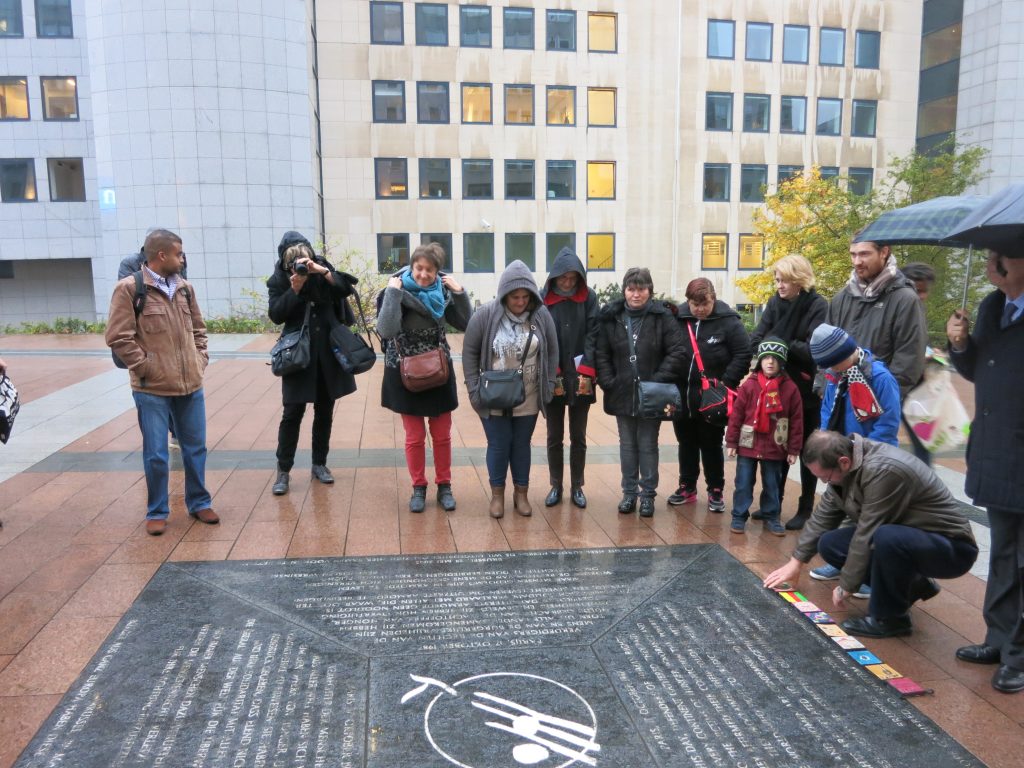
    The meeting was concluded with the traditional ceremony around the commemorative stone in honour of the victims of extreme poverty.
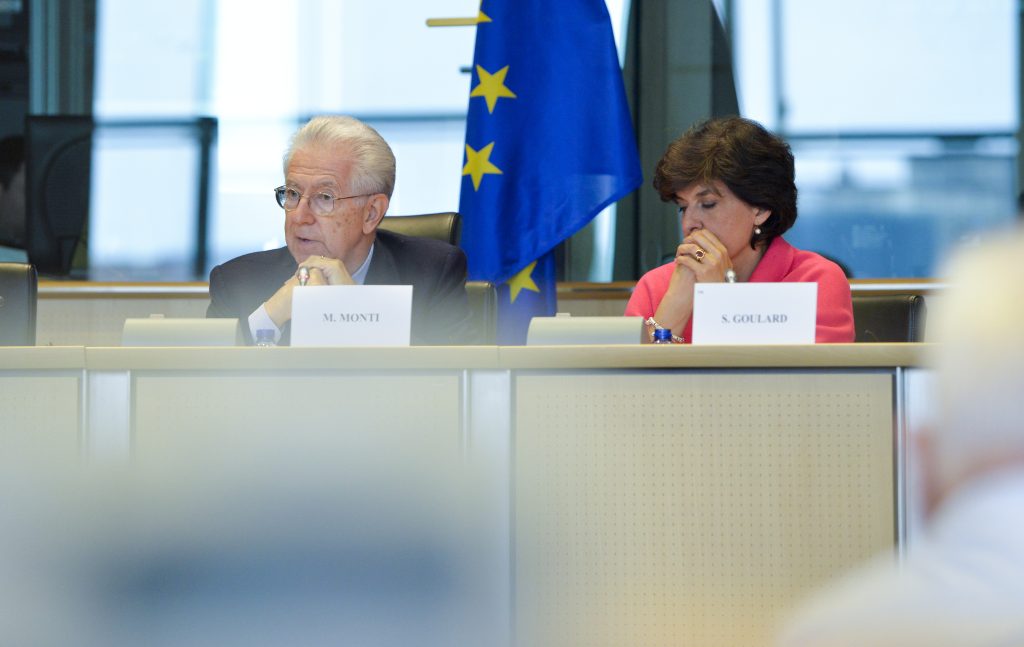
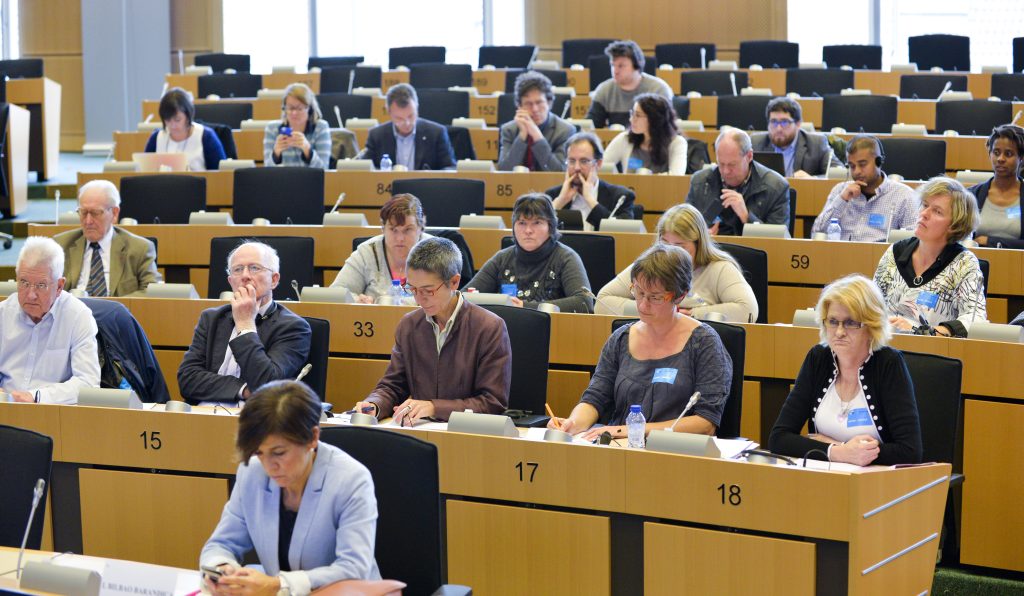
    (c) European Parliament 2015 and Sylvie Goulard’s office

  • Interview au journal Les Echos sur la réforme structurelle des banques

    Interview au journal Les Echos sur la réforme structurelle des banques

    Où en est le projet de séparation bancaire au Parlement européen ?

    Actuellement, il y a une forme de blocage qui tient essentiellement à ce que les parlementaires socialistes sont loin d’être unanimes derrière leur rapporteur fictif. Des tractations sont en cours, portant sur les seuils qui définissent une banque représentant un risque. L’approche n’est qu’en apparence arithmétique. En manipulant tel ou tel paramètre, on évince telle ou telle banque. On se retrouve avec le risque d’une législation dont chacun fait semblant d’accepter le principe à condition que ses propres banques y échappent. Toutes les options sont donc sur la table, y compris le retrait du texte. Cela vaudrait sans doute mieux que n’importe quel compromis.

    Un tel compromis pénaliserait-il les banques françaises ?

    C’est un fait : les banques françaises pourraient être les principales victimes de ce texte. Mais je n’aborde pas la question sous cet angle. Mieux vaut s’interroger sur la pertinence du projet. Première objection : il ne tient pas compte de la création du superviseur unique et du mécanisme de résolution unique. Entre-temps est aussi apparu au niveau mondial le nouveau coussin TLAC (« total loss absorption capacity »). Aujourd’hui, la question des banques systémiques ne se pose plus de la même manière. Faut-il ajouter des contraintes à un moment où il est urgent d’encourager le financement de l’économie ? La deuxième question à se poser, c’est la dimension stratégique du secteur bancaire. Aux Etats-Unis, personne ne l’oublie. Il est essentiel, pour une économie, d’avoir des outils de financement à sa disposition. Nous n’avons rien à gagner à nous imposer des contraintes si celles-ci permettent à des tiers de récupérer la mise.

    Que proposez-vous ?

    Il est malsain que le législateur fasse des textes taillés sur mesure pour faire entrer ou sortir telle ou telle entité de leur champ d’application. Cela crée des distorsions de concurrence. La crise de 2008 a montré que les risques pouvaient venir de banques qui avaient séparé leurs entités de marché du reste de leurs activités. On a l’impression qu’il y a un retour du manichéisme dans cette affaire, une volonté de séparer le bien du mal pour pouvoir s’en flatter auprès du grand public. Alors que nous disposons désormais d’un superviseur très compétent, capable d’apprécier au cas par cas la question du risque systémique. C’est la même question que celle de la zone euro : pouvons-nous nous contenter de règles quantitatives ? Ne vaut-il pas mieux renforcer les pouvoirs des entités chargées du contrôle ? Il faut se garder de croire qu’on aura résolu les problèmes avec des formules mathématiques.

    Gabriel Grésillon, Les Echos

    Bureau de Bruxelles

  • Euradio Nantes : Comment lutter contre la pauvreté en Europe ?

    Euradio Nantes : Comment lutter contre la pauvreté en Europe ?

    Le 17 octobre a lieu chaque année la Journée Mondiale de lutte contre la pauvreté (ONU), également Journée du refus de la misère (ATD-Quartmonde.

    Alors qu’un européen sur cinq est menacé de pauvreté (chiffre Eurostat), quels sont les leviers d’action en Europe ? Quelles priorités aujourd’hui quand on parle de lutte contre la pauvreté ?

    Des questions posées à Sylvie Goulard, eurodéputée ALDE, présidente de l’Intergroupe de Lutte contre l’extrême pauvreté au Parlement Européen.

  • Euradio Nantes : Comment lutter contre la pauvreté en Europe ?

    Euradio Nantes : Comment lutter contre la pauvreté en Europe ?

    Le 17 octobre a lieu chaque année la Journée Mondiale de lutte contre la pauvreté (ONU), également Journée du refus de la misère (ATD-Quartmonde.

    Alors qu’un européen sur cinq est menacé de pauvreté (chiffre Eurostat), quels sont les leviers d’action en Europe ? Quelles priorités aujourd’hui quand on parle de lutte contre la pauvreté ?

    Des questions posées à Sylvie Goulard, eurodéputée ALDE, présidente de l’Intergroupe de Lutte contre l’extrême pauvreté au Parlement Européen.

  • Politico “Battle royale over top ‘Juncker Plan’ posts”

    Politico “Battle royale over top ‘Juncker Plan’ posts”

    Shouting matches, rogue hearings and finger-pointing cloud the appointment process.

    By Quentin Ariès and James Panichi

    A behind-the-scenes fight in the European Parliament over the appointment of top managers for a €315 billion EU investment plan has MEPs accusing each other of national stereotyping as they attempt to muscle in on the Commission’s role in filling the jobs. 

    The power struggle descended into a shouting match last week at an informal, closed-door hearing of candidates for the second most-powerful position in the new European Fund for Strategic Investments. The hearing itself was already controversial, as the European Parliament has no role in the appointment process other than ratifying the choice made by the Commission.

    Italian MEP Roberto Gualtieri, chairman of the Economic and Monetary Affairs Committee, clashed with prominent panel member Sylvie Goulard, a French MEP. Goulard objected to the way the meetings were run and was concerned that the committee was trying to shoe-horn an Italian bureaucrat into the role of the fund’s deputy managing director.

    The informal vetting process for the new fund’s top jobs has left the economic panel deeply divided, frayed its relationship with senior members of the Budgets Committee and antagonized the Commission, which had not agreed to the Parliament’s expanded role. And the relationship between two prominent MEPs has “totally collapsed” as a result of the hearings, according to one official familiar with the process.

    The investment fund was a key campaign promise of Jean-Claude Juncker in the 2014 election for the Commission presidency, and his executive’s political credibility is linked to the program’s success. The dispute shows how the nascent fund is still vulnerable to national interests competing for a slice of a huge spending pie. It also highlights Parliament’s ongoing efforts to exert more influence.

    The European Fund for Strategic Investments, known as the “Juncker Plan,” will raise €315 billion over three years to support investment and help kick-start stalled EU economies. The EU budget will contribute €16 billion to the fund, with €5 billion coming from the European Investment Bank.

    ‘Underhanded Italian maneuver’

    Italians have weighed into the job-selection melee, arguing that opponents of the candidacy of European Investment Bank official Alessandro Carano for the new post were relying on stereotypes suggesting an Italian could not be trusted with managing a large investment fund.

    “They have been trying to portray this as some kind of underhanded Italian maneuver, as though being an Italian should rule him out,” said an MEP who was present at the informal hearing.

    Carano, who was interviewed by both the European Investment Bank and the Commission, told POLITICO he was simply a civil servant who had applied for a job. “I have no links with either national governments or political parties,” he said.

    Key appointments to the fund’s management structure are being hotly contested among EU countries, and observers in Parliament say the center-left Italian government, which is hoping to use the fund to support key infrastructure development, is determined to see an Italian national in a top role.

    To manage the hiring process, the Commission announced in January that it would ask the European Investment Bank (EIB) to develop a shortlist of candidates to help a “steering board” select the right person for both the roles of managing director and deputy managing director. The board is made up of three officials from the Commission and one from the bank.

    The only role Parliament was given in the process was the right to hold an up-or-down vote on the selected candidate, which will take place at a confirmation hearing on October 6. The Commission said it is following the appointment procedures and it will inform Parliament of its choice of candidate ahead of the hearing.

    Closed-door hearings

    But the economics committee launched its own informal vetting process of the EIB shortlist — a process called “pre-hearings” which the panel can use to reach agreement ahead of a formal confirmation. Such meetings offer a way to put political pressure on the Commission to take Parliament’s candidate preferences into account. The meeting took place in Gualtieri’s office on September 22.

    Gualtieri contacted the Budgets Committee chairman, Jean Arthuis, a French member of the Alliance of Liberals and Democrats for Europe group, to inform him of the informal hearings. The Budgets Committee had also been involved in the process of setting up the Juncker Plan.

    But according to members of that panel, Arthuis declined to take part and instructed his committee members to steer clear of the process, fearing it lacked a legal basis.

    While the shortlist has not been finalized, MEPs have confirmed that Wilhelm Molterer, a former Austrian center-right finance minister who is now on the EIB’s management committee, was top of the list and his candidacy for the role of managing-director was not contested.

    Also on the list were Carano, an EIB official who had been seconded to the Commission to help set up the Juncker Plan, and two female candidates — a Spaniard and a Bulgarian.

    Gualtieri declined to respond to claims he had clashed with Goulard, but defended the process. “The European Parliament has clear prerogatives in this area,” he said, “and we are determined to ensure that merit and the quality of the candidate prevail over any attempt of politicization.”

    Goulard also declined to discuss the argument, but said it was “not a matter of people, but a matter of principle.” She said that fund’s money should “go to good projects which are not based on what passport those backing the project hold.” Goulard also said she was keen to see Parliament support gender balance in such appointments.

    One MEP who attended the informal hearing said the Bulgarian candidate, who took part via video-conference, made a strong presentation and was widely seen as the Commission’s preferred candidate for the deputy managing director role. MEPs believed Commission Vice President Kristalina Georgieva was backing the woman, described as a former Bulgarian junior minister. Georgieva’s office did not respond to a request for comment.

    Other MEPs who attended the informal hearing said there was broad, cross-party consensus that Carano was the strongest of the candidates.

    Fabio de Masi, a German MEP from the left-wing European United Left/Nordic Green Left grouping, said that unlike other applicants, Carano spoke frankly about problems which had been identified and how he would address them. “For me, it was purely a decision based on

    [Carano] being the one most willing to address the concerns of Parliament,” de Masi said.

    De Masi said he has never supported the Juncker Plan and, while being of Italian descent, he opposed the Italian government of Matteo Renzi and had little in common with the Italian center-left in the European Parliament — which includes Gualtieri. However, he said Carano was both “knowledgeable and determined that it should not be business as usual” and he clearly won over the MEPs who heard him speak.

    But MEP Marco Zanni, from Italy’s anti-establishment Five Star Movement, said the quality of the candidate was not the issue. “Even if the Italian turns out to be the best, what Gualtieri has done goes against conventions and certainly against the rules,” said Zanni, who is a member of both the the economic committee and the budgets committee.

    “I received an invitation to attend [the informal hearing] but I declined it,” Zanni said. “I will have no problem in attending the official hearing. But this unofficial meeting held in Gualtieri’s office — this goes against the way Parliament should work.”

    “The shortlist must be officially communicated to Parliament,” he said. “To the best of my knowledge, that has not happened yet.”

    This article was updated to clarify the explanation of Parliament’s role in the confirmation process.

    Authors:

    Quentin Ariès

    and
    James Panichi

  • BFM Business – Nicolas Doze: Les Experts

    BFM Business – Nicolas Doze: Les Experts

    Au sommaire: Le libéralisme est-il de gauche ? Emmanuel Macron est-il en service commandé ou assume-t-il une forme de libéralisme ? Avec: Alain Madelin, président du fonds Latour-Capital, Jérôme Dedeyan, Président d’Erès, et Sylvie Goulard, Députée européenne ALDE. – Les Experts, du mardi 29 septembre 2015, présenté par Nicolas Doze, sur BFM Business.

    Au sommaire: La Catalogne veut son indépendance: quid de l’uniformité de l’Europe ? Combien d’Europe y a-t-il en fin de compte ? Avec: Sylvie Goulard, députée européenne ALDE (Alliance des Libéraux et des Démocrates pour l’Europe). Jérôme Dedeyan, président d’Erès, conseil et gestion d’actifs indépendants pour la retraite, l’épargne salariale et l’actionnariat salarié. Et Alain Madelin, président du fonds Latour-Capital. – Les Experts, du mardi 29 septembre 2015, présenté par Nicolas Doze, sur BFM Business.

    Sylvie Goulard

  • Ne cèdons pas à la facilité souverainiste

    Ne cèdons pas à la facilité souverainiste

    Sylvie Goulard, députée européenne de l’Alde (Alliance des démocrates et libéraux en Europe), appelle les centristes à combattre le repli sur soi de la France.

    Nombre de Français sont prêts à voter pour un parti, le Front National, qui conteste les choix fondamentaux de tous les gouvernements français d’après-guerre : une société et une économie ouvertes, l’unité des Européens, l’appartenance à l’Alliance atlantique. S’il arrivait au pouvoir, les valeurs, la sécurité et la prospérité de la République seraient en péril. Ce programme destructeur fascine. Une partie des intellectuels, des médias s’associent au jeu de massacre. Le pays de Descartes et des Lumières préfère « le ressenti » à la raison.

    Où est passé le centre censé défendre les idées libérales et l’idéal européen ? Divisé en chapelles rivales, il vivote. C’est un échec qu’il faut avoir le courage de regarder en face, même si les autres partis modérés ne font guère mieux, qu’ils croient lutter contre Marine Le Pen en adoptant ses vues, ou qu’ils s’accrochent à des visions sociales archaïques.

    Pourquoi les nationalistes ont-ils tant de succès ? Parce que leurs adversaires acceptent, à tort, de rester sur leur terrain : malgré la multiplication des défis transfrontières, l’horizon des partis politiques, y compris ceux qui se disent pro européens, demeure désespérément national. Pour combattre le souverainisme, encore faudrait-il s’en garder et assumer le nécessaire changement d’échelle.

    D’autres démocraties, en Europe, tombent dans le piège. En Angleterre,  en Hongrie, des populistes de tous bords font miroiter des solutions faciles, en escamotant la contrainte externe.

    En France, l’importance accordée à l’élection présidentielle aggrave le phénomène. Obnubilés par cette échéance, les partis français préfèrent la mystique au travail de fond. Parce qu’elle sacralise le Président « garant de l’indépendance nationale », la Vème République nie l’interdépendance. Les Français sont maintenus dans leurs illusions : la France est le nombril du monde, le génie du chef gaulois, perché sur son bouclier, suffira à les sauver. On ne parle que de l’Élysée. Tout se passe comme si la classe politique entière s’était convertie à un gaullisme vague,  y compris ceux qui, du temps du Général, récusaient cette conception du pouvoir.

    Les Français sentent bien que la lutte contre le changement climatique, contre le terrorisme appelle une action transnationale. Mais comme personne ne leur propose d’alternative crédible, certains d’entre eux  cèdent à la facilité souverainiste. C’est humain. Adhèrent-ils pleinement aux thèses du Front National ? Ce n’est pas sûr. S’ils prenaient la peine de lire son programme, ils verraient ses énormes failles. Toutefois, victimes du chômage et des inégalités, déçus par les promesses non tenues ou simplement lassés de voir toujours les mêmes têtes, ils cherchent  « autre chose », ils crient leur désarroi.

    La colère populaire mérite notre respect. Des réponses de fond doivent être apportées, sans raconter d’histoires : aucun État européen n’est plus à même d’agir seul et l’Europe bâtie pour prendre le relais patine, notamment à cause des ambiguïtés françaises depuis 1989. La course à l’Élysée n’est pas une fin en soi. Elle doit tirer les Français vers un projet plus ample, la construction d’une démocratie européenne au service d’un monde moins anarchique.

    Le débat politique doit intégrer les données chiffrées, les projections démographiques, les réalités globales qui balaient d’elles-mêmes les illusions souverainistes. Alors les prestidigitateurs du Front National seront ramenés à ce qu’ils sont : des individus qui ne proposent rien de sérieux, prêts à tout  pour conquérir le pouvoir. Les premières victimes de ces pseudo-patriotes seraient les Français.

    Pour révéler la supercherie, le camp modéré doit assumer le besoin de transcender l’hexagone. C’est une tâche difficile mais exaltante, susceptible de motiver les jeunes. Si la sauvegarde de la paix à l’intérieur de l’Europe n’est plus pour eux un horizon, la défense de la planète et d’une plus grande justice sociale les interpelle.

    Avec Robert Schuman, les centristes ont créé la méthode communautaire qui a instauré de nouveaux rapports entre Nations : pacifiques, fondés sur la règle, respectueux de la diversité. Cette innovation peut contribuer à l’édification d’un nouvel ordre mondial. Ceux qui moquent cet idéalisme devraient expliquer quelle est l’alternative : le choc des Etats souverains où la France irait se fracasser contre les puissances émergentes ?

    Le centre devrait également assumer les vertus du libéralisme économique. Pour créer des emplois, il faut libérer la créativité dont on sent, sur le terrain, qu’elle ne demande qu’à s’épanouir. Il est temps d’abolir les rentes et les statuts, d’encourager la concurrence qui protège les faibles contre les puissants, les jeunes contre les personnes installées. L’économie numérique bouleverse les modes de production et de travail, les relations sociales, la notion d’autorité. Les partis traditionnels tardent à en prendre la mesure dans leurs programmes, comme dans leur fonctionnement.

    Enfin, aucun État n’est plus en mesure de répondre seul aux défis stratégiques de notre temps. Loin d’être un problème dû à l’existence de l’espace Schengen, l’afflux de réfugiés tient à l’absence de politique de sécurité et de défense européenne. Face à un tel défi, le survol de la Syrie par des avions français ne suffit pas. La barbarie du soi-disant Etat islamique appelle une riposte d’une toute autre ampleur.

    La France jadis ouverte à l’universel, rayonnante en Europe, s’étiole. De Bruxelles, je vois un pays au formidable potentiel qui, année après année, gâche son influence. Sa réputation est ternie. Quand un tiers des députés européens français sont ouvertement xénophobes, coupés des réalités économiques, quand les autres ne savent plus toujours s’ils sont prêts à partager la souveraineté, il y a urgence. C’est à un centre renouvelé, fidèle à ses valeurs et à son histoire, de relever le flambeau.

  • Villeroy de Galhau et l’influence européenne de la France

    Villeroy de Galhau et l’influence européenne de la France

    Haro sur François Villeroy de Galhau, inspecteur des finances, ancien dirigeant de BNP Paribas, candidat au poste de gouverneur de la Banque de France ! Des économistes, des élus crient au conflit d’intérêts. Vu de Bruxelles, le débat a quelque chose de consternant.

    A quoi sert, en 2015, la Banque de France ? Elle ne bat plus monnaie, elle ne supervise plus les banques nationales. L’une des missions cruciales de son gouverneur est de siéger au conseil de la Banque centrale européenne (BCE). L’expérience des institutions européennes et des rouages de l’Etat, une voix forte, voilà les qualités requises pour la diriger. Bien des détracteurs de M. Villeroy de Galhau sont les premiers à demander un contrepoids à l’Allemagne et à ses « dogmes monétaires ». Face au puissant président de la Bundesbank, Villeroy de Galhau, excellent germaniste, bon connaisseur de l’Italie, serait un interlocuteur solide. Sa conscience sociale n’est pas non plus à prouver.

    Est-il gênant d’avoir été banquier pendant quelques années ? Face à la puissance de la finance, la naïveté n’est pas de mise, mais c’est un organisme européen dont le siège est à Francfort qui supervise le secteur bancaire. Quand nous avons auditionné Mario Draghi en 2011 au Parlement européen, nous avons pesé le pour et le contre, compte tenu de son expérience chez Goldman Sachs. Une partie de la gauche française mobilisée contre Villeroy de Galhau porte Mario Draghi aux nues pour sa politique monétaire inventive et son défi au marché de l’été 2012. C’est pourtant sa connaissance fine des marchés anglo-saxons qui explique en partie son succès. Si les individus dotés d’une expérience pratique sont systématiquement écartés, l’Eurosystème sera encore plus perçu comme technocratique, coupé du réel. En outre, les enjeux financiers sont planétaires. Avoir vécu de l’intérieur les vicissitudes d’un groupe européen global peut être un atout pour riposter par exemple à l’extraterritorialité des lois américaines.

    Peut-on être indépendant quand on a été dans le secteur privé ? L’intégrité, essentielle, exige un cloisonnement étanche entre passé et présent. Mais l’intéressé a publiquement renoncé à plus de 1 million d’euros de rémunérations différées. En poussant l’acharnement, il est à craindre que la France ne devienne une société de suspicion, dépourvue de passerelles entre sphère publique et entreprises privées.

    Un académique ferait-il mieux l’affaire ? Plusieurs banques centrales du monde sont ou ont été, dirigées par des économistes. Le métier requiert une expertise, mais ce n’est pas la seule qualité requise. Les économistes ne sont pas infaillibles, comme la crise l’a prouvé. La controverse en cours reflète une France cloisonnée où chacun prêche pour sa paroisse alors que les étiquettes devraient moins compter que les vertus individuelles.

    La nomination va suivre son cours. M. Villeroy de Galhau sera auditionné puis le Parlement français tranchera. Je regrette que la question importante de la parité hommes-femmes ait été évacuée alors même que la domination masculine reste, hélas ! l’un des traits de la finance. La France peut faire en sorte que deux hommes de talent, aux profils différents, siègent au Conseil des gouverneurs de la BCE, l’un comme membre du directoire, très apprécié, Benoît Coeuré, nommé en 2011 pour un mandat de huit ans assurant son indépendance, l’autre comme gouverneur de la Banque de France. La France et l’UE ont tout à perdre à opposer deux personnes de cette qualité. Il y a quelque paradoxe à se plaindre de la perte d’influence de notre pays et à gâcher la plus précieuse de ses ressources, la ressource humaine.

    Sylvie Goulard

    Sylvie Goulard est députée européenne ALDE.